Worshipping the King this Christmas

christmas_decorations_200592

Christmas is almost upon us. Have you wrapped all the presents, bought the turkey, and started to make up beds for family and friends that will be staying with you?

This time of year is really busy isn’t it? There are a few Christmas services still to attend/run too. And what about those films your kids are desperate to see, and the now seemingly obligatory visits to Santa available at every shopping and garden centre…

 I asked you in my last column what you would do if God wanted to interrupt your plans this Christmas. Whether He has or not, how have you made room for Him in these last couple of weeks?

I know Christmas can be a really pressurised time of year, as there is simply so much to organise and the coming together of people who don’t see each other regularly can be stressful.

But amongst all the heightened commercialisation of the season, how have you been worshipping the King?

Black Friday showed us how much our culture worships material goods – people were fighting over things they really don’t need just to get a ‘bargain’.

So, as we approach Christmas itself, I think it’s really important to slow down, just for a minute or two, and ask, ‘Am I worshipping the King in my Christmas plans?’.

To read the rest of this article please click here.

Advent remembering

It is my absolute pleasure to welcome writerly friend Lucy Mills for this brilliant guest blog about embracing a new kind of remembering this Advent:

advent candles by Stushie

Advent Candles image by Stushie.


I often forget about Advent until I’m in it. More accurately, I don’t realise how fast the time has gone and suddenly it’s mid December and – oh. I feel irritated; as if I’ve missed out on something. Is it worth it, now? Or have I missed the Advent bus?

This year I did at least notice when December began, which has helped. I had already made a note, in fact, that I needed to prepare myself for Advent. I know that sounds odd, as Advent is itself a preparation.

Yet I forget to make time and space for that preparing to take place.

I forget a lot of things.

These past 12 months or so have been quite significant for me. We’ve moved to a new area and a new church (my husband is a Baptist minister). I’ve made new friends as well as trying to nurture the old. The editing role I already had has now shifted to one with more responsibility and oversight. And – I appear to have created a book. And it appears to have been published.

How odd! How extraordinary! I’m a first-timer, poking it to check if it is real. I’m also a little shy of it now. After years of pouring myself into it, I feel a bit self-conscious. Reading it makes me squirm a little, like watching myself on screen.

I’m tempted to leave it on the shelf, to draw a line under it.

But that would make a mockery of what it is about. Because the book is a confession: of my own forgetfulness. My tendency towards distraction, every day and any day. And it’s also a reflection on the importance of remembering God in our daily lives – what this means.

I can’t draw a line under it; it’s part of my continuing journey and it’s as relevant to me now as it was when I started it.

Because my condition is chronic. I neglect my faith. I don’t open my bible. Then I feel guilty about how long it’s been since I opened it. So I don’t think about it, and the pages remain unread. I pray occasionally rather than continually. I reach a point where I feel empty, and I am blind enough to wonder why.

I’ve forgotten who I am. I’ve forgotten who I am because I’ve ceased remembering who God is. As a Christian, my identity is in Christ. Yet instead of focusing on him, my eyes drift. When I squint towards my faith, I do so through a fog of my own distractedness. I don’t allow times for rest and reflection – I fill them up with mediocre diversions. I’m a little scared to face myself and admit my forgetfulness. So I embrace the forgetfulness even more.

It takes discipline to pull myself back, and often it’s the tug of the Holy Spirit – not my own strength. God, in all patience, woos me into returning. I come understanding: whom have I but you? To whom else would I go?

The seasons of the Church are, in many ways, tools for remembering. Advent, focusing on the coming Christ, can be a great antidote for forgetfulness, if we dare to take more than a cursory sip of it. The incarnate Christ came as a fragile baby into a dark world; the resurrected Christ is still present with us now by the power of the Spirit. And the glorified Christ will come again.

Today, in spite of my busyness, in spite of the distractions, I choose to take a breath. I allow myself to remember. A mere moment, perhaps, but it births more moments as I form a habit of pausing.

This Advent, take a moment to pause. Breathe. Allow yourself to take a handful of stillness. It will help you get perspective on the rest of it – the hurly-burly, the ever-changing, the tugging cords of life.

Reflect on the light that came into the darkness, the light that cannot be put out. And ask for that light to shine on all your distractedness and disrepair.

You haven’t missed the bus. It’s not too late to start a new kind of remembering. Every morning is another chance to draw close to our God of mercy and grace. Seek the One who knows every part of you – the shallow and the deep – and who loves you.

I need to hear this, to reflect on it this Advent season.

Do you?
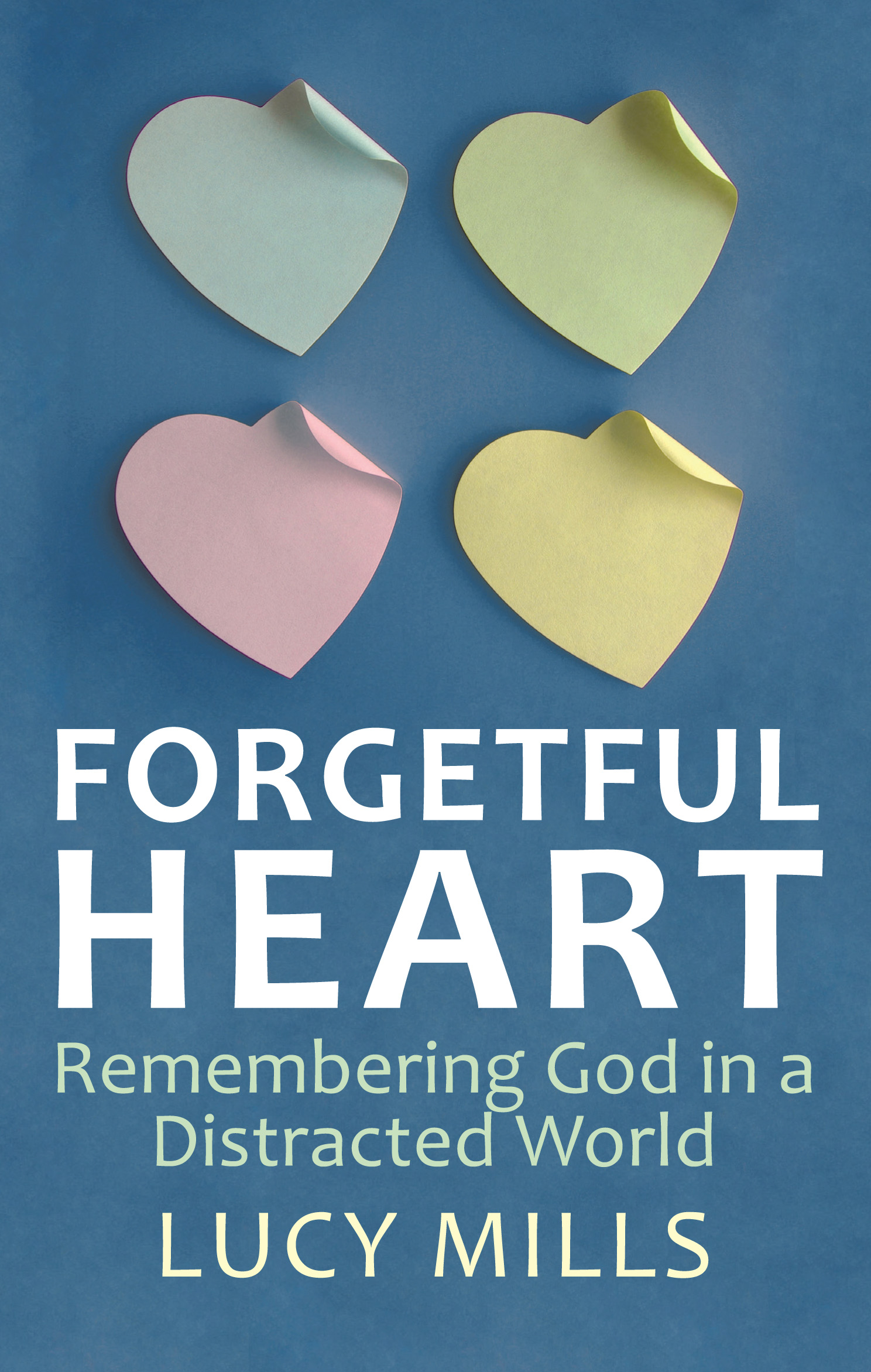
FH high res

Lucy Mills has written a wonderfully challenging book on how our hearts can be so forgetful. Here are the details – I will be reviewing it some time but, for now, I thoroughly recommend it. A good choice for a Christmas present 🙂

Forgetful Heart: Remembering God in a Distracted World is published by Darton, Longman and Todd (2014). You can read more about it on her website.

Are you willing to let God disrupt your life?

Bible_study___Advent_419658179

We are now in Advent, traditionally a time of looking forward and preparing for the coming of Christ through acts of remembrance and repentance as we get ourselves ready spiritually.

The word advent is the anglicised version of the Latin word adventus, which means ‘coming’, ‘arrival’, ‘approach’. During this time we remember the longing ancient people had for a saviour, a messiah, but also how we should be alert for His second coming.

Today, however, I’ve been pondering the consequences of one particular visit or ‘approach’ that started off the events of that first Christmas. That of the angel Gabriel visiting Mary, which I’ve been looking at in Luke 1:26-38.

I was struck afresh today what a bizarre and potentially terrifying experience it must have been for a young girl to suddenly be face to face with an angel. That itself was mind-blowing enough. And yet what about his message? To be told that you, a young, unmarried virgin, would be the mother of the Son of God?!

We obviously don’t get a blow-by-blow account of the story in the Gospels, but I wonder what your response would have been if you had been given such a life-changing message?

We are told that at the start of the conversation ‘Mary was greatly troubled at his words’ (Luke 1:29). Don’t you just love the Bible’s skill at understatement? Troubled? I think I would have either frozen stiff, screamed for help or run away. And that was before he’d even told her God’s plans…

Mary was obviously someone who sought God and made following Him a priority; that must have helped her recognise that this angelic being was indeed sent from God. I admire her courage for sticking it out, for staying long enough to hear his full message.

Pondering the passage in Luke, I do believe that God’s peace must have descended on Mary when she accepted that she was listening to His messenger. How else could she stand there and listen without having a serious freak out?

But what strikes me the most is her simple trust and obedience. Just listen to what she says when Gabriel has finished his speech: ‘I am the Lord’s servant,’ Mary answered. ‘May your word to me be fulfilled.’ (v38)

Part of me wants to shout at her: ‘Come on Mary he’s just totally disrupted your wedding plans – actually, he may well have cost you your wedding. Who is going to believe that you will become pregnant by the Holy Spirit? That just sounds crazy. Do you really think Joseph will believe you?’

And yet that side of me is silenced by the piercing effect her response has. Mary was being asked to trust an angelic being who had brought her a message that would turn her life upside down but, not only that, would change the world if the boy indeed turned out to be the Messiah they were all hoping for. What a privilege … but what an enormous upheaval that necessitated her laying down her rights to all her dreams and plans.

What this passage has made me consider, is what I would do if Jesus or an angel came to me and asked me to disrupt my plans. Not my whole life – just my week’s plans.

To read the rest of this reflection, please click here.

There’s a crack in my fishbowl

9781782641292I am delighted to welcome Gerard Kelly to my website as a guest blogger. A prolific poet/writer, he has just released his first novel, The Boy Who Loved Rain, a beautifully emotive book tackling huge issues: toxic family secrets, suicide, self-harming… As a pastor’s wife, I was intrigued to see how the central family would deal with the enormous crisis brewing in their lives – particularly as the father, a pastor, will not acknowledge their problems or seek help from outside the church. I was totally drawn into the novel, especially through the way Gerard portrayed the troubled teenager, Colom.

Politicians, entertainers, sports stars and other celebrities often talk of the pressures of living in the limelight. Work / life balance is hard to maintain and where they have families it is hard to establish any kind of normal rhythm for their children. They live in a fishbowl, visible to all. They are subject to constant judgements from those who look on – always ready to offer an opinion and all too often happy to see their idols fall.

My novel The Boy Who Loved Rain explores this fishbowl lifestyle through a different and very specific group of of people: the leaders of churches. Theirs is not a life of celebrity – it would be difficult to describe weekly sessions in the pulpit as ‘the limelight’ – but the pressures on their families are nonetheless real.

David and Fiona Dryden, church leaders and parents to the adolescent Colom, feel this pressure acutely, not least because the growth of their church has come from their acknowledged expertise in parenting. David in particular hands out advice quite publicly – saving marriages and keeping families together. All is not well, though, in the Dryden household. There are dark secrets not far below the surface, and the decision to keep them from the light only means the impending crisis will be deeper.

Renowned psychologist Paul Tournier in his book Secrets suggests that keeping a secret is the first step to becoming an individual. The second step, he says, is telling it. Colom, at fourteen, is on the cusp between the two, and the comfort that secrecy has brought him in childhood will not sustain him in his adult years. The question is whether his parents will have the courage, for the love of their son, to let light shine.

I’m intrigued by the dilemma faced by David and Fiona Dryden because this is my world. I’ve pastored churches and I’ve worked with others doing the same, and too often I’ve seen uncomfortable truths swept under the carpet. It doesn’t matter how successful your ministry is, or how well known you are for helping others: your children are your children and their needs will neither be defined nor be met by the success of your ministry. They need parents, not professionals, and if any role is a crash course in the power of truth-telling, it is parenting. I’ve made huge changes in my own life, including career decisions that on the surface seem foolish, when I’ve seen that the needs of my family are clashing with the demands of my role. My children, as they’ve grown, have become my teachers, and listening to them has been a hard-won but hugely rewarding discipline.

The Boy Who Loved Rain is about the battle to take adolescents seriously; to allow them to be the central actors in their own drama; to recognise that their journey and my journey are not one and the same. Adolescence is the period in which a child moves from being a passenger in someone else’s vehicle to learning to drive their own. Controlling parents, who love nothing more than having their hand on the wheel and assume that they will be making all the route decisions, don’t always take well to this transition. We have plans; goals; desires for our children’s lives: but it is not our job to deliver them. Only they can fight their battles; only they can live their life. Our job is to equip them; to set them on their way, but ultimately to free them to be the warriors their nature and their maker have designed them to be.

For families in the fishbowl, this process of freeing our children might mean a choice – of relationship over reputation; of family over fortune; of those we love over those we serve. In my experience, it is a choice worth making. Sometimes it is the only choice that will save our children’s lives – and our own.

The Boy Who Loved Rain is published by Lion Fiction. Thanks to them for the review copy and for inviting me to be part of the blog tour.

Worship Central: pithy quotes to ponder

This year’s Worship Central Conference was full of great times of worship, unsurprisingly, but also jam-packed with wisdom to take away and ponder. Here are some thought-provoking quotes taken from the weekend, which I have been spending time with ever since. Hopefully they will give you something to reflect and act upon too:

“Every great thing requires a great sacrifice.” Louie Giglio

“God has lots of children in the church today; I’m honestly not sure He has many friends.” Mike Pilavachi

“Life comes from death. To the degree that I can live in the death of Jesus – to that degree I can channel God’s life to others.” Louie Giglio

 “Worship starts with seeing something great and then reflecting it to the world. Let’s see God so we can reflect God.” Louie Giglio

 “My life is not about the set list, it is to be set apart.” Louie Giglio

 “Worship should be about united values instead of united styles.” Mark Underwood

 “Whatever your story, the world does not need to mould you.” Tim Hughes

 “As long as we are faking it we are just showing the world how to fake it – but they already are! They want to see us get real.” Louie Giglio

 “Invite failure into the process of song writing; allow yourself permission to fail. Rock bottom becomes your foundation on which to build. Have you reached rock bottom so you can know what matters to you – what God has put into you?” Nick Herbert

 “We don’t tend to focus on our creative processes but on the final outcome. We’ve lost the art of enjoying our creativity.” Rev Will van der Hart

 “Write songs which reflect God’s perspective and then you’ll see God move.” Jake Isaac

“Quit trying to do what I already know you can’t do and let Christ do what only He can through you.” Louie Giglio

 “Our culture doesn’t like being told what to do; that’s happening in the Church.” Mike Pilavachi

 “The Holy Spirit was not sent so we can have bless ups in our churches but so the world can be changed.” Mike Pilavachi

 “You have to get out of the boat so you can know the intimacy of walking with Jesus.” Mike Pilavachi

 “Greater intimacy leads to greater fruitfulness.” Rachel Hughes, quoting Heidi Baker

 “As Christians we can call self-health and compassion ‘self-indulgence’.” Rev Will van der Hart

 “Point to the creator, rather than to yourself.” Rev Will van der Hart

 “Are we going to lead safe lives, based on our past experiences or cling to the Lord and His promises?” Rachel Hughes


Are you God’s friend?

“God has lots of children in the church today; I’m honestly not sure He has many friends.”

So said Mike Pilavachi at last weekend’s Worship Central conference. I haven’t been able to get the quote out of my head ever since.

Mike was talking about how we can be more intimate with God. He commented that God wants His church to grow up – not to stop being His children, but to be His friends too.

Exploring the concept of friendship, Mike said that while he’s heard of “the five love languages” God has a sixth: obedience.

I have been pondering this subject for a while myself. As God’s people, what is it that sets us apart, which shows we belong to Him? Surely obedience to Him is a key indicator of that?

God never stands over us beating us into submission, and yet Jesus said that if we love Him we will obey His commands (John 14:15). The ultimate expression of love is doing things that we know will please the other person – and that basically boils down to obedience.

We can see that at work in the relationship Jesus describes in John 15, where He says that He loves because His Father has loved Him, and that He remains in God’s love by keeping His commands. He urges us to do the same, in order to enjoy that relationship of love and joy for ourselves too:

“If you keep my commands, you will remain in my love, just as I have kept my Father’s commands and remain in his love.

“I have told you this so that my joy may be in you and that your joy may be complete.” (vv10–11)

John expresses the same sentiment in 1 John 5:3: “In fact, this is love for God: to keep his commands. And his commands are not burdensome…”

So why do we find the whole idea of obedience difficult? Well, as Mike pointed out, as a society we don’t like to be told what to do; our culture is a very individualistic one in which I am in control of my destiny.

To read the rest of this article please click here.

Lessons from the cheese box

This morning I opened the fridge door and immediately spotted that the box that we keep our cheese in had moved shelves. My family had been staying for the weekend and had looked after our kids while we were out, so they had obviously put it back in a different place. I was intrigued by my response: I was both offended and surprised.

The offence came from my immediate reaction: “What’s the cheese box doing there? That’s not where it lives!” and the surprise, “Hmm, it looks neater there – perhaps that’s a better spot”.

As I shut the fridge door I felt God whisper to me, “That’s your response when people do things differently to you”. I knew He was talking about the ‘offended’ response. Ouch.

As part of a leadership training course I’m attending, we’ve spent time looking at how well we foster new leaders. I’ve started asking myself these sorts of questions:

Do I encourage others into new leadership roles or am I fearful of what that might mean for me?

Do I always ‘need’ to be involved in new initiatives or am I happy to see others bring them into fruition?

Do I gladly embrace new ways of doing things suggested by other people or do I do so half-heartedly, grumbling in my heart that it will never work and ‘knowing’ that mine is the better way?

Am I seeking to raise up other leaders who will be able to take over the roles I am currently in, or am I holding on too tightly?

To read the rest of this article please click here.

Parenting: a spotlight on your soul

Last night I went to the Care for the Family event: Mum’s the Word. Over 25o mums gathered at Everyday Church, Wimbledon for a night of encouragement and inspiration – hosted by the wonderful Cathy Madavan and Diane Louise Jordan.

There was so much I enjoyed about the night. After a frantic rush to get there, it was so lovely to be handed a cup of tea, sit down to a complimentary goody bag and bottle of water and listen to two inspiring women. Sometimes I can find the whole ‘we’re in this together’ approach cringe worthy, as speakers desperately try and show that they are just like you. Because the efforts of said speakers can have me squirming in my seat, totally turned off of what they are saying. But that didn’t happen with Cathy and Diane – somehow they had that mix of down-to-earth honesty, integrity, friendliness and authority just right. They managed to make us feel connected to them; it was definitely an evening of shared experiences. So hats off to them – I was incredibly impressed by their presentation skills.

So what did I learn? Well I was reminded of so many principles that my husband and I started off with as parents, but I guess can get overshadowed in the craziness of everyday life. Here’s some of the gems I took away from the evening:

Put yourself first – if you are frazzled you will have a short fuse with your kids. I think this is one that us mums find really difficult to do, because we can feel guilty about focusing on ourselves. We usually come down the bottom of the list of things to do and people to care for. But, as we were reminded last night, if you don’t look after yourself how can you hope to give out well to your kids?

Find the right priorities for the season you are in – we are all at different seasons and have different kids and different priorities (I loved how they kept emphasising the fact that there is no ‘one size fits all’ approach). We were challenged to look at our diaries and see if they reflect the priorities we have currently. I’ve never thought of doing that so I’ll definitely be trying it!

Keep a long-term view – every now and again stop and think about what you are doing with your parenting approach. Rather than just muddling through the daily mess, step back and check whether your approach is building confidence and security in your child(ren).

Give your kids roots… and wings – I love this one! Our kids need our help to grow solid, deep roots but also need the confidence to be able to fly.

As a parent the days feel long but the years are short – so true!

Diane’s three tips:
It’s all about love
Seek to understand
Look beyond the behaviour – yours as well as theirs

That last one really struck me and so I’m going to be totally honest here. I’m sure (I hope!) I’m not the only one, but I’ve found that parenting has highlighted my shortcomings. It has definitely been a spotlight on my soul and there are times I really don’t like what is revealed.

I can find myself reverting to childish responses when my kids push my buttons (mainly in my mind, but sometimes they come out in my actions too – ouch!). I can get so tired of dealing with the same issues that I just want to shout ‘it’s not fair!’. In fact, I do that sometimes. I go to God feeling like a miserable, moody child and have a good old moan. When I’m finally done with that, I ask Him to replace those emotions and equip me to love my children well.

My daughter, in particular, is the one that challenges me, because so often it is like looking in a mirror. I delight in seeing her fulfilling her potential, and am amazed at her creativity and imagination, but she also seems to have the same weaknesses as me. Sometimes I feel totally helpless and ill-prepared to guide her through how to deal with them, as I haven’t got all the answers myself and am still struggling with some of the issues too. But I’m learning that God is the source of all wisdom so I can ask Him for keys to unlock the issue for both of us. I’ve found also that it can be helpful to share honestly with your children when you make mistakes or are struggling. If I can model to my kids how to take those things to God and deal with them in partnership with Him then hopefully that is a habit they will cultivate too.

Being a mum is SUCH hard work – who knew we had to be an expert in so many areas?!! But it is so rewarding too – and incredible that God has given us such wonderful gifts in our children. Motherhood can be isolating at times, when we are juggling so many balls we don’t have time to share notes with other mums. Evenings like last night are invaluable reminders that we are never alone. And, as Diane and Cathy said last night, we are great mums, with great kids. Let’s never forget that…

Feeling restless

St Augustine wrote, “[God] you have made us for yourself, and our hearts are restless until they rest in you.”

“Our hearts are restless”: that’s a great description of life today.

So often I feel restless. I’m rushing around making sure the kids get homework done, get to their after-school clubs, are fed and looked after.

I rush around with church activities, chatting issues through with my husband as he seeks to lead the church well, organising rehearsals and leading worship, trying to spot new people and welcome them as well as look after those who’ve been in the church for years.

I rush around with my work, meeting deadlines and thinking up new ideas for writing projects. Yes there is a bit of space for pondering within that, but too often it is pressurised, rather than restful.

I rush from one evening meeting to another – church meetings, governors’ meetings, music practices, even rushing to exercise classes.

I feel restless a lot of the time. I know the better way is to start by positioning myself at Jesus’ feet, learning from His wisdom rather than trying to do things in my own strength. But I find that so hard to do.

I wrote about finding the rhythm that works for me and my family recently; I’m still working on that if I’m honest!

I arrived at church a couple of Sundays ago totally at the end of myself, but with my keyboard ready to play. I could barely speak, let alone sing, so one of the guys helpfully suggested we prayed together before doing anything else. And what one of them prayed for me really stuck with me – here’s a summary of it:

‘Lord, Claire works so hard for you. Help her to learn to rest.

I’m one of those people who find it difficult to sit down and relax until all the jobs in the house are done. I simply can’t leave dirty dishes on the side or floors unvacuumed. That may be why our vacuum cleaner suddenly stopped working when I was midway through vacuuming one of the downstairs rooms that weekend. I still had the upstairs to do! But I simply couldn’t, which meant that, after church that Sunday, we were able to settle down and have a family film time.

I was forced to rest.

Does God ever make you stop, through circumstances or even illness? If only we’d rest more regularly without Him having to step in and force us.

To read the rest of this post, please click here.

The healing paradox

God can heal, so why doesn’t it always happen?

A few weeks ago we had an amazing church outreach weekend. With meetings on the Friday night, Saturday night and Sunday and all day on the high street, we had plenty of time to receive prayer and speak to people about our faith.

Our faith was greatly encouraged through what we saw and experienced. Some highlights included watching a woman on the high street, who had been in wheelchair for over 30 years, walk for the first time and a man who had been deaf in one ear for over 50 years hear perfectly through it.

And yet why was it that, on the Sunday morning as my husband and I were chatting over what had happened and were praying for that morning’s meeting, the conversation took the inevitable turn of talking about those who aren’t healed?

To read the rest of this article please click here.